
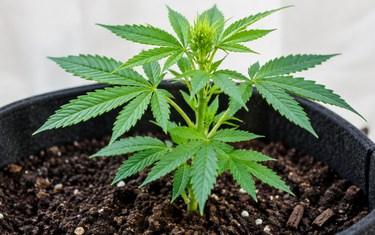
Living soil is a growing medium that contains active soil life: bacteria, fungi and other microbes that break down organic matter and make nutrients available to roots. You feed the soil, and the soil feeds your plants. It works best when you keep the soil moist, airy and not too strongly fertilised. Bionova Living Soil is a granular, slow-release fertilizer with microbes in it, made to be mixed through your substrate.
What is living soil?
Living soil is soil in which the biology is still working. Microbes, mycorrhizal fungi and enzymes turn organic material into forms a root can take up. In normal potting soil this life is often low or missing, so the plant depends fully on the nutrients you add in the water.
In a living soil the plant gets part of its food from the soil itself. You may also hear the term "super soil". It means a similar idea: a soil mix that is prepared in advance so it can feed the plant for a long period.

How living soil works
Roots release sugars. Microbes live around the roots and feed on these sugars. In return they release nutrients from organic matter and from minerals in the soil. Mycorrhizal fungi grow along the roots and help the plant reach water and nutrients further away.
This only works when the soil life has what it needs: air, moisture and a stable environment. That is why a living soil is airy and crumbly, not heavy and compact.
Bionova Living Soil: what is in it
According to the Bionova Living Soil product page, it is a granular fertilizer made from natural ingredients with an NPK of 6-5-7. It contains mycorrhiza species, Bacillus species, enzymes, amino acids, humates, kelp and compost. It is made to release its nutrients slowly over a plant cycle of 12 weeks.
Each bag contains 220 grams and is meant for mixing with 15-20 liters of substrate. Once you water, the granules slowly dissolve.
How to use living soil
Mix the granules through the soil before you plant. Do not leave it as a layer on top, because the microbes need to be close to the roots. Then water as normal.
To support the soil life further, you can add Bionova Microlife. The product page gives 1 kg of Microlife per 500 liters of soil, and it can be used from the first week of growth until harvest. For a tea, the product page describes 10 g per liter of chlorine-free water with an air pump running for 2 to 6 hours, used within 2 hours after the pump is switched off.
If you grow in old or reused soil, the Soil Improver Pack combines Living Soil, Microlife and Soil Supermix in one pack.

Do you still need to feed with a living soil?
That depends on your plant and your goals. Living Soil is a slow-release fertilizer, but a full feeding schedule is built for plants that get most of their food from the water. If you combine both, start low and watch the plant. Dosages for the Bionova Soil Supermix and the stimulators are in the official feeding charts. The Soil chart gives a target pH of about 6.0-6.5, and it allows you to adjust doses in steps of 10% up or down. See the feeding chart for all other values.
Browse the full Soil collection for the main fertilizers and stimulators that go with soil.
Common misunderstandings
"Living soil means no feeding at all." Not always. A soil can hold a limited amount of food. Long or heavy-feeding grows may still need extra feeding.
"More microbes is always better." Microbes need a good environment. Soil that is too wet or compact will not work well, even with a lot of products added.
"Living soil is only for outdoor growing." You can use it in pots indoors as well. Keep the pots well drained and watch the moisture.
"I can sterilise the soil and add microbes later." Strong salts and very harsh treatments can harm soil life. Keep the feeding moderate so the biology stays active.
Is living soil right for your grow?
Living soil suits growers who want a simple, steady setup in pots or beds and who like to work with the soil instead of only with the feed water. It is less suited if you want to control every nutrient value each week, as you do in hydro or coco. In that case a main fertilizer for your substrate and the feeding chart give more control.
Think about three things before you start. First, your pot size: a bigger pot holds more soil life and more food. Second, the length of your cycle: a longer cycle may need extra feeding later. Third, your water: if you use soft water or reverse osmosis water, the Soil chart advises adding Ca 15 and MgO 10, so check the chart for the amounts.
Simple checks during the grow
Look at your plant every few days. Leaf colour, growth speed and how fast the pot dries all tell you if the soil is working. Water when the top of the soil is dry and the pot feels lighter. Avoid keeping the soil soaked, because roots and soil life both need air. If the plant looks pale or growth slows down, check your pH and the moisture first, and only then change the feeding.
FAQ
What is living soil?
Living soil is a growing medium with active microbes and fungi that release nutrients for the roots from organic matter.
Is living soil the same as super soil?
The terms are close. Both describe a soil that is prepared in advance with ingredients that feed the plant over a longer period.
Can I use living soil for cannabis?
Yes. Many growers use living soil for cannabis in pots. Follow the product instructions and the feeding chart for your substrate.
How much Living Soil do I mix into my substrate?
One 220 gram bag is meant for 15-20 liters of substrate, according to the product page.
